When specifying a yard ramp, it’s easy to focus on the ramp itself. Load capacity, trailer compatibility and gradient are all important, but they’re only part of the story.
The right accessories can make a significant difference to safety and help businesses reduce risk while keeping loading operations running smoothly. Whether you’re investing in a new yard ramp or reviewing an existing setup, it’s worth considering which accessories are most appropriate for your operation.
Why are yard ramp accessories important?
Every loading operation is different. Site layouts, vehicle types, weather conditions and working practices all influence how a yard ramp is used and the risks that need to be managed.
That’s why accessories shouldn’t simply be viewed as optional extras. They allow a standard yard ramp to be adapted to the realities of a specific site, whether that’s reducing the risk of falls, preventing vehicle movement or improving equipment stability during loading.
Before selecting accessories, a thorough site-specific risk assessment should be carried out. It’s important to consider the entire loading and unloading process, not just the movement of forklift trucks.
So, what yard ramp accessories should you consider?
Handrails
One of the most common questions when specifying a yard ramp is whether handrails are necessary.
Many businesses assume they aren’t required because the ramp is intended for forklift use only. However, it’s worth asking a simple question: is it realistic to assume nobody will ever stand on the ramp?
A forklift driver may be tempted to step off to inspect a load before unloading. Someone may need to remove damaged packaging, clear debris from inside a container or carry out routine checks. While these activities may not form part of the intended use of the ramp, they are exactly the types of situations that can arise in busy loading environments.
If there is any realistic possibility that somebody could end up standing on the ramp, this needs to be considered at the specification stage.
Falls from relatively low heights can sometimes be underestimated. Because a yard ramp isn’t particularly high compared to a loading bay or elevated platform, the risks associated with a fall can appear less significant. However, any fall carries risk, particularly if it results from a trip, slip or loss of footing.
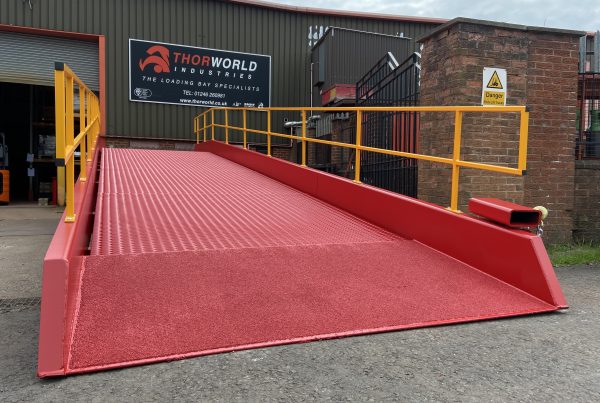
Where pedestrian access is required, suitable edge protection is necessary to address the risk of falls from height. In practice, this will often mean full-length handrails fitted to both sides of the ramp to help ensure the loading operation remains compliant and safe.
Businesses sometimes worry that handrails will reduce usable width or get in the way during loading operations. However, systems can often be configured to minimise their impact on functionality, maintaining as much usable ramp space as possible while still providing the required protection.
Wheel chocks
Wheel chocks are one of the simplest safety accessories available, but they’re also one of the most important.
Even minor trailer movement can increase risk during loading and unloading. Wheel chocks help prevent unwanted movement by securing the vehicle in position, creating a more stable working environment for forklift operators.
It’s a simple addition, but one that can play a vital role in supporting safe loading procedures.
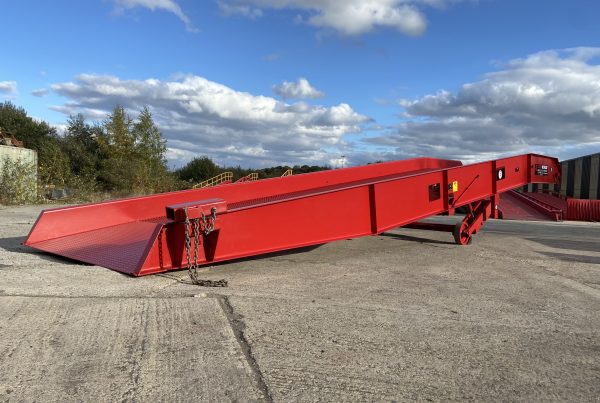
Chocks should also be used when the ramp is parked / out of use, ensuring it doesn’t move uncontrollably. This is particularly important if the yard is sloped, or if there is a risk of impact from passing vehicles.
Safety interlocks
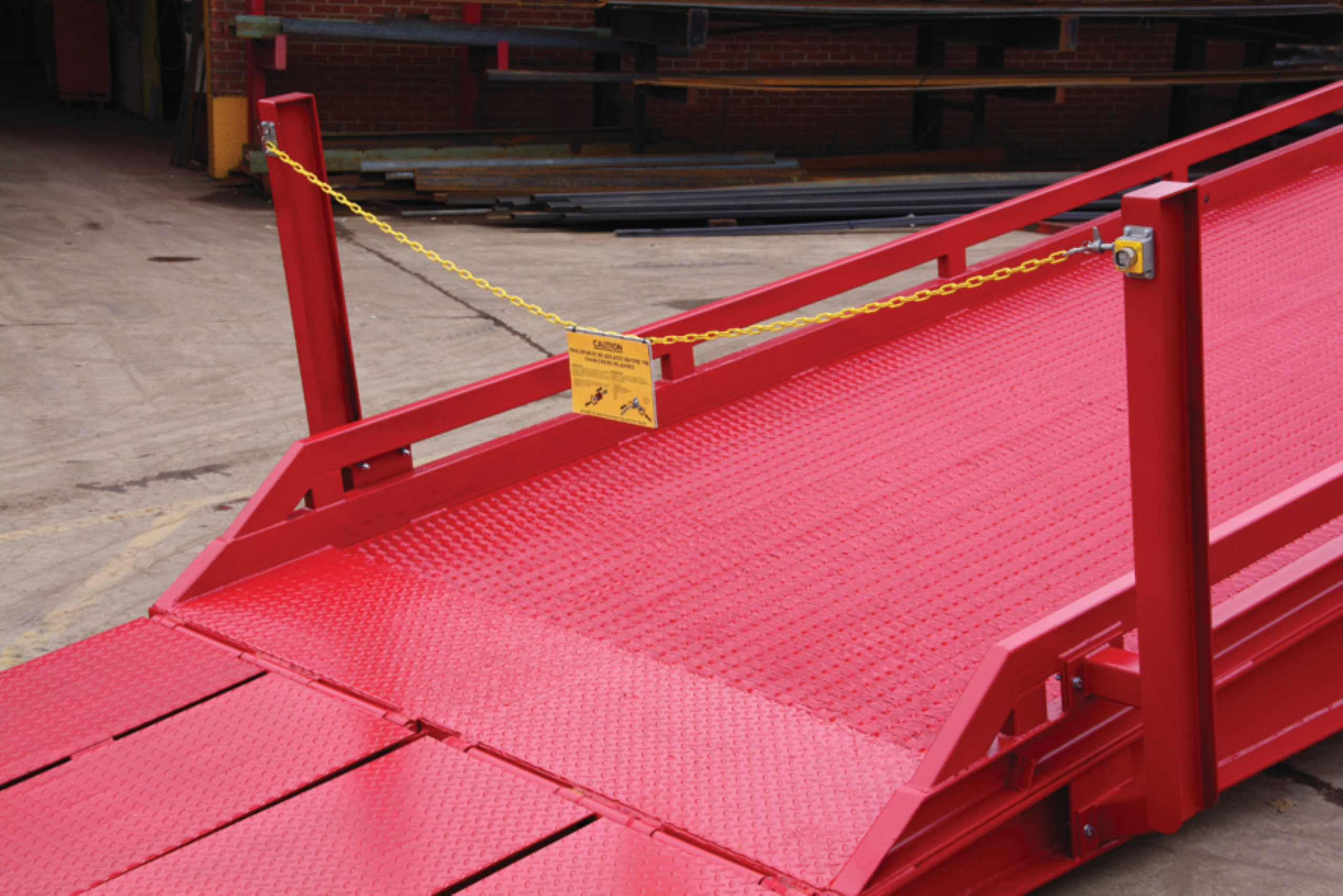
Safety interlocks provide an additional safeguard during loading operations.
They help ensure the ramp remains correctly positioned and connected throughout use, reducing the risk of unintended movement.
By helping to prevent avoidable equipment movement, they provide an extra layer of protection and contribute to a safer, more controlled loading operation.
Anti-slip surfaces
Loading doesn’t just stop when the weather changes.
Rain, frost, standing water and general wear can all affect grip levels on loading equipment. Anti-slip surfaces improve traction and help reduce the likelihood of slips, supporting safer operation in a wide range of conditions.
This can be particularly valuable for businesses who have pedestrians on a ramp operating outdoors, helping maintain safe loading throughout the year.
Electric powerpack upgrades
While often associated with convenience and efficiency, electric powerpacks can also support safer operation.
Adjusting a yard ramp manually can take time and effort, particularly where multiple trailer heights are involved. Electric powerpacks simplify the process, making it easier to position the ramp correctly while reducing the amount of manual handling required.
By helping operators set up equipment quickly and correctly, these upgrades support both usability and safe working practices.
Towing adaptors
Whilst all our yard ramps can be moved using a standard fork lift truck, different site operating requirements may call for alternative solutions, to work with your specific materials handling equipment, fork truck attachments, or site layout.
We offer a range of alternative solutions, and our design team is happy to discuss any site-specific issues you are encountering.
The best yard ramp setup improves safety, efficiency and usability
The best yard ramp setup is one that reflects how the equipment will actually be used.
Handrails, wheel chocks, safety interlocks and anti-slip surfaces each address different risks, while powerpack upgrades can make equipment easier to position and operate. Together, they help create a safer, smoother and more reliable loading process.
Most importantly, improving safety doesn’t have to come at the expense of efficiency. In many cases, the right accessories help deliver both.
It’s also worth remembering that safety improvements don’t always have to be made when a yard ramp is first purchased. As operations evolve, many accessories can be added retrospectively to existing ramps, allowing businesses to enhance safety without investing in a completely new solution.
Want our advice?
Every loading operation is different, which is why there is no one-size-fits-all approach to yard ramp accessories.
Here at Thorworld, we work closely with customers to understand how their operation works in practice and recommend the most appropriate setup for their requirements. Whether you’re specifying a new yard ramp, reviewing an existing setup or considering retrospective upgrades, our team can help identify the features that will deliver the greatest benefit.
To discuss your application get in touch with us today.