The UK steel industry is increasingly recognised as a strategic national asset. From infrastructure and construction to defence and energy, domestic steel production plays a critical role in economic resilience and security.
But while attention is often focused on steel production itself, there is another part of the ecosystem that is just as important: the manufacturers who use steel.
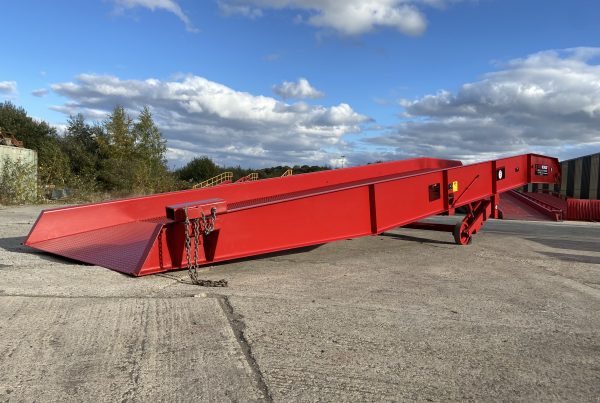
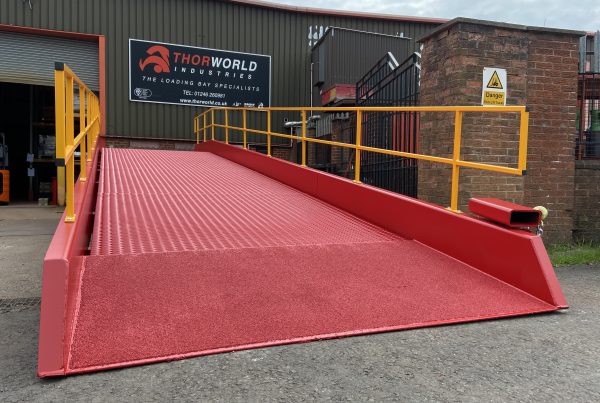
At Thorworld, steel is the primary material used in the loading equipment we design and build in Chesterfield. Like many UK manufacturers, we rely on a steady supply of high-quality steel to support our operations and, ultimately, our customers.
We fully support the Government’s ambition to strengthen the British steel sector. However, achieving that goal requires a balanced approach, which recognises the interdependence between steel producers and the industries that use their products.
The risk of unintended consequences
Proposed changes to steel tariffs – set to come into effect from 1st July – are designed to protect domestic producers from global market pressures, including aggressive pricing from countries such as China.
However, if not carefully calibrated, these measures can create unintended consequences further down the supply chain.
When tariffs increase the cost of imported steel, UK manufacturers face higher input costs. At the same time, imported finished goods (often containing significant quantities of steel) may not be subject to equivalent measures.
The result is a structural imbalance. UK manufacturers are placed at a disadvantage, while overseas competitors can continue to access the market on more favourable terms.
Why this matters for British steel demand
This imbalance doesn’t just affect manufacturers, it also has implications for the steel industry itself.
If UK-made products become less competitive, customers may turn to imported alternatives. Over time, this reduces output from UK manufacturers and, in turn, lowers demand for steel, including British-made steel.
In other words, policies intended to protect steel production risk reducing demand for it, if the needs of downstream industries are not taken into account.
A more joined-up approach
Supporting British steel means supporting the entire value chain, from production through to end use.
That could include measures such as:
- addressing cost pressures for steel used in UK manufacturing
- recognising where domestic supply is limited or unsuitable
- considering the impact of tariffs on finished goods, as well as raw materials
The objective should not simply be to shield one part of the industry, but to create the conditions for sustainable demand across the whole system.
Quality, standards and long-term resilience
There is also a broader consideration around quality and standards. In sectors where safety and reliability are critical, material quality matters.
While competitive pricing is important, it cannot come at the expense of performance or compliance. Ensuring that UK manufacturers can continue to produce high-quality equipment is essential for maintaining trust across the supply chain.
A shared interest
Thorworld is based in Chesterfield, close to the ‘Steel City’ itself, Sheffield. This heritage reflects a broader truth: steel and manufacturing have always been interconnected. One cannot thrive without the other.
If the UK is to build a resilient industrial future, policy must recognise that shared interest and ensure that both steel producers and steel users are able to compete on a level playing field.
We recently welcomed our local MP, Toby Perkins, to discuss these matters. He is raising our concerns with the Department for Business and Trade (DBT) and we will continue to raise these issues to help secure the right conditions for UK manufacturers.