For many businesses, loading and unloading is an integral part of the working day. Goods arrive, goods leave and operations need to keep moving. The problem comes when there is no fixed loading dock in place.
This is often the case for older warehouses, temporary facilities or sites where loading requirements have changed over time. Installing a permanent dock is not always practical, yet businesses still need a safe and efficient way to move goods between vehicles and the warehouse.
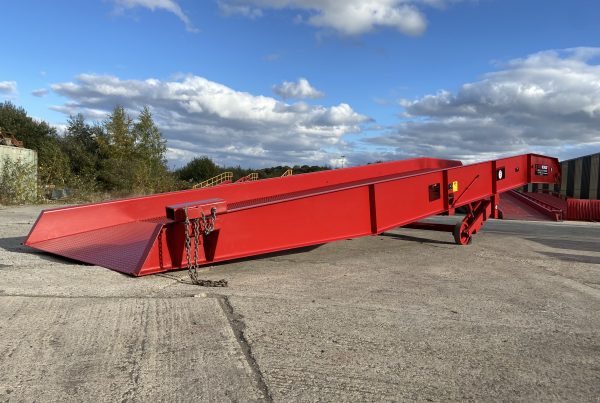
A yard ramp provides a straightforward solution. By creating a bridge between ground level and a trailer or container, it allows forklifts to access vehicles directly without the need for fixed loading infrastructure. As a mobile solution, it can also be positioned where it is needed and moved as operational requirements change.
In addition to loading and unloading trailers and containers, yard ramps can also be used to connect the yard to a raised warehouse. By securing the ramp against an existing loading dock or warehouse entrance, forklift trucks can move directly between the building and external loading areas. This can be particularly useful when loading or unloading curtain-sided trailers, helping goods move efficiently between the vehicle and warehouse. In many cases, this can be achieved simply by adding fixing brackets to a standard mobile ramp.
Loading without a fixed dock
Loading docks are useful, but they’re not always available. Businesses often outgrow their existing facilities, take on additional space or operate from sites where installing a permanent loading dock simply isn’t practical.
The need to move goods doesn’t disappear just because there’s no loading dock. Vehicles still need loading and unloading, turnaround times still matter and operators still need safe access to trailers and containers.
A yard ramp helps bridge that gap by creating a temporary loading point between ground level and the vehicle. Rather than relying on permanent infrastructure, businesses can introduce dock-level access where it is needed, allowing forklifts to move directly into trailers and containers. Because the ramp is mobile, it can also be repositioned if site layouts change or loading activities move to a different area of the yard.
This flexibility is one of the reasons yard ramps are commonly used by businesses that are growing, experiencing seasonal fluctuations in demand or operating across multiple locations. They provide a practical way to maintain efficient loading operations without committing to extensive building works or being restricted to a single loading point.
Direct forklift access improves efficiency
One of the biggest advantages of a yard ramp is that it allows forklifts to drive directly into trailers and shipping containers. Without this access, loading operations can involve additional handling. Products may need to be moved several times before reaching their final destination, increasing both labour and loading times.
By providing a direct route into the vehicle, a yard ramp helps simplify the process. Forklift operators can move goods more quickly and efficiently, reducing unnecessary handling and helping maintain the flow of products through the operation.
These efficiency savings can have a wider impact too. Faster loading and unloading means vehicles spend less time waiting around, helping improve turnaround times and supporting a smoother workflow throughout the site.
A safer alternative to ad hoc loading methods
When there is no dedicated loading solution in place, businesses often have little choice but to work around the problem. That might mean unloading at ground level, moving goods multiple times before they reach the warehouse or relying on access routes that weren’t designed for regular loading activities. The biggest concern is that these situations can push operators into improvising methods to keep goods moving and turnaround times on track. While those approaches may solve the immediate problem, they can also increase the risk of injury to people and damage to products or equipment.
Ad hoc loading methods are rarely designed with long-term efficiency or safety in mind. Ground-level loading can lead to additional handling, more vehicle movements and less structured working practices. Ultimately, the more stages involved in the loading process, the more opportunities there are for something to go wrong.
Rather than forcing businesses to adapt their processes around site limitations, a yard ramp provides a dedicated route between the vehicle and the ground, creating a more controlled environment for loading activities. Forklift movements become more predictable, and operators have a clear access point for entering and exiting trailers or containers.
Flexibility for growing operations
Few businesses stay exactly the same forever. A company may take on new contracts, experience seasonal peaks in demand or expand into additional locations. What works today may not work in six months’ time. This is where the mobility of a yard ramp becomes particularly valuable. Because it can be repositioned as requirements change, businesses can create loading access where it is needed without being tied to a single location.
Whether additional loading capacity is required during busy periods or loading activities move to a different area of the site, a yard ramp can adapt alongside the operation. For businesses operating across multiple locations or planning for future growth, this flexibility can help support changing demands without the need for permanent building work.
Flexibility also extends to availability. While many businesses choose to purchase a yard ramp, short-term rental options can provide a practical solution when requirements change unexpectedly. Whether responding to seasonal peaks, last-minute changes in plans or the breakdown of existing loading equipment, renting a yard ramp can help keep operations moving without disruption.
Is a yard ramp the right solution for your business?
A yard ramp is often the answer for businesses that need efficient forklift access to trailers and containers but do not have a permanent loading dock.
By providing a safe, mobile solution for loading and unloading, improving vehicle turnaround times and supporting changing operational requirements, yard ramps can help businesses create an effective loading point wherever it is needed.
If you’re considering a yard ramp and would like some advice, get in touch with our team. We can discuss your operation, understand the challenges you’re facing and recommend a safe and practical solution for your site.