Choosing the right loading platform starts with understanding how your team works and what your site needs. Using a platform can help make loading safer and more efficient, reduces strain on operators and ensures goods move smoothly between your yard and vehicles.
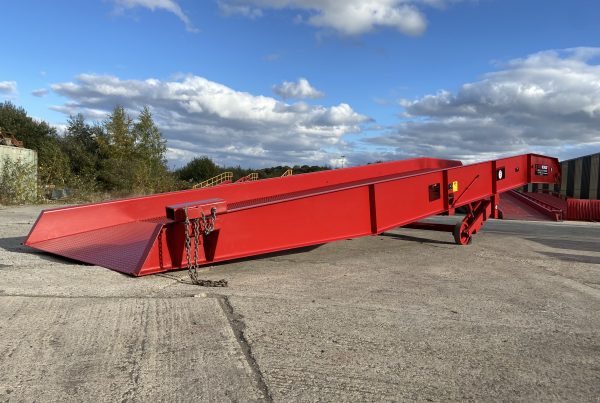
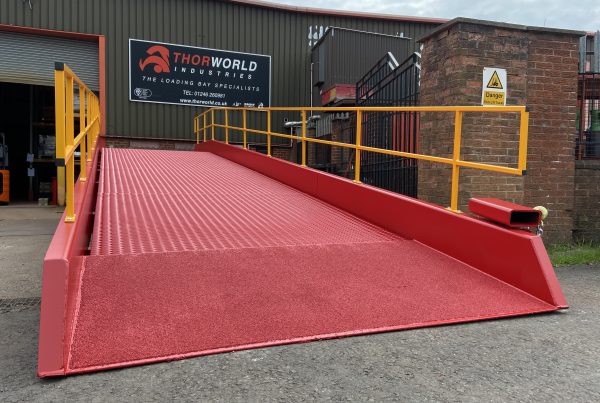
At Thorworld we offer two main options, fixed modular docks and mobile loading platforms (also known as lightweight mobile platforms) so the key is finding the one that fits your space and the loads you handle.
So what do you need to consider?
Load type and weight
Consider the goods you move most often. Modular docks are built to cope with heavier and repeated loads and can be expanded with dock levellers, steps, ramps and safety features to match your operation. Mobile loading platforms can bear up to 2000 kg and work well for lighter applications such as pallet trucks, or manually hand-balled goods. You also need to take into account the size and frequency of loads. If you regularly handle heavy items, a fixed platform will provide the stability you need. For occasional or smaller loads, a mobile platform may be enough and this solution has the added benefit of being able to be repositioned to where it is needed.
Handling equipment
Think about the equipment your team uses every day. Forklifts, powered pallet trucks and manual pallet trucks require different levels of stability. Modular docks are designed to provide a permanent, secure surface for repeated use with heavier equipment. Whereas mobile loading platforms include height adjustable legs, fork truck pockets and gas-spring assisted barriers for safe positioning, among other features, making them ideal where flexibility is needed. Matching your platform to the type of handling equipment reduces wear, prevents accidents and keeps operations going.
Frequency of loading
The number of times you load each day affects which platform is right. If your operation runs multiple loading cycles daily a modular dock is designed to handle that intensity and can be customised with additional modules or ramps. For seasonal or less frequent loading a mobile loading platform can provide a simple, safe solution that can be moved as needed without permanent installation.
For example, a warehouse handling daily palletised deliveries with forklifts will typically benefit from a fixed modular dock, whereas a site unloading containers or vehicles a few times a week in different yard areas may find a mobile platform more practical.
Knowing how often the platform will be in use will help you avoid overloading lighter equipment or underutilising a fixed platform.
Vehicle Types
Different vehicles require different platform heights and access arrangements. Mobile loading platforms can be positioned against trailers or containers to provide a safe working height while modular docks can be designed with ramps and dock levellers to suit the specific vehicles at your site. Knowing the types and heights of the vehicles you load most often helps you choose a platform that creates a level and safe transition.
Space available and yard layout
Space and layout are often overlooked but are essential. Modular docks are best for permanent loading points where there is room for manoeuvring and operating equipment. Mobile loading platforms are ideal in tighter spaces or where layouts change regularly, allowing the platform to be repositioned without disrupting operations.
Our standard size mobile loading platforms are 2.4×2.5m or 2.4×3.6m, however non-standard sizes can be made on request. Modular docks, by contrast, are fully bespoke, designed specifically around your site layout and operational requirements.
Safety requirements
Safety should always be a top priority when choosing a loading platform. The right solution should not only support compliance but also protect your team during day-to-day operations. Both our modular docks and mobile loading platforms are designed to support safe operations, but they do so in different ways. Fixed modular docks offer a predictable, permanent loading point, which can help create consistent processes and reduce risk in high-traffic or routine operations. Mobile platforms, meanwhile, provide safe access in areas where a fixed solution isn’t practical, allowing you to bring a controlled loading point to where it’s needed.
Key safety considerations include ground conditions, correct positioning, and how the platform integrates with your existing workflows. Even with our safety features such as safety rails, non-slip surfaces and curbs, safe operation requires using the platform in the right context, with the right training.
Need help to make the right choice?
There is no single solution that suits every site. The right platform depends on a variety of factors as are mentioned above. Both modular docks and mobile loading platforms can be a great benefit to your operations when used correctly.
If you are unsure which option would work best for your site, send us a message and one of our expert team members will be able to help. We can review your requirements and recommend a safe and practical solution.