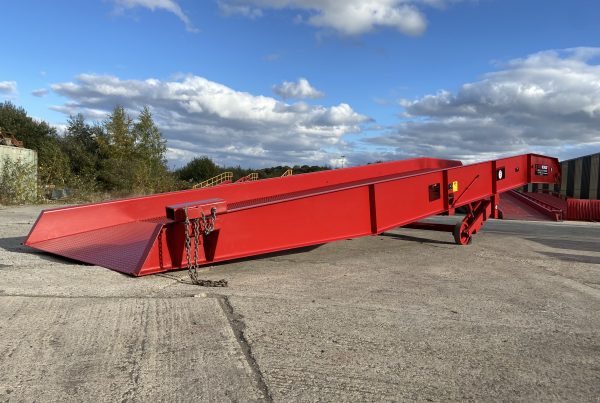
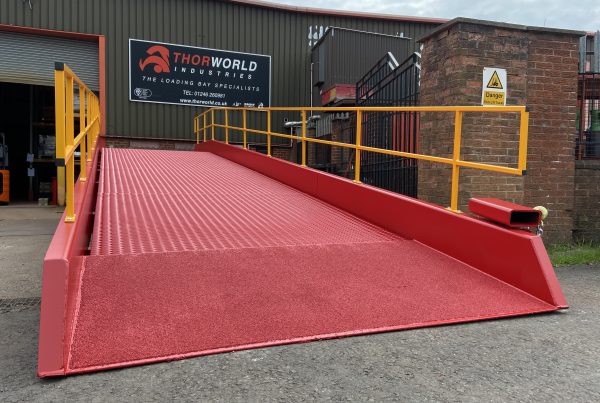
When it comes to loading bay equipment, most businesses start by looking at the product. Will the loading ramp handle the required capacity? Is the dock leveller the right size? Does it meet the site’s operational requirements?
These are all important questions. However, after more than 45 years of helping businesses improve their loading and unloading operations, we’ve found that the supplier behind the equipment can be just as important as the equipment itself.
The right supplier won’t simply sell you a product. They’ll take the time to understand your operation, provide practical advice, help you avoid costly mistakes and support you long after the equipment has been installed.
Whether you’re investing in loading ramps, dock levellers, vehicle restraints or a complete loading bay solution, here are nine questions worth asking before making your decision.
- Do they have the experience to understand your challenge?
Every loading bay is different. Different vehicle types, site layouts, load capacities and operational requirements all influence what equipment is needed and how it should perform. A supplier with extensive industry experience is often able to identify challenges and opportunities that may not be immediately obvious.
Experience isn’t just about years in business. It’s about the knowledge gained from working across thousands of applications and helping customers solve real-world problems. At Thorworld, we’ve spent more than four decades helping businesses across a wide range of industries create safer and more efficient loading environments. That experience helps us quickly understand operational challenges and recommend practical solutions.
- Do they listen before they recommend?
One of the most valuable things a supplier can do is listen. Good suppliers don’t rush to provide a product, they start with a conversation.
Before discussing products, they should want to understand your operation, your objectives and the challenges you’re trying to overcome. The more they understand about your application, the more likely they are to recommend a solution that genuinely meets your needs.
- Can they help you choose the right solution, not just a product?
The cheapest option isn’t always the most cost-effective. Equally, the largest or most complex solution isn’t always the right one.
An experienced loading bay equipment supplier should be able to guide you towards equipment that is suited to your operation, usage levels and future requirements. This includes helping determine the correct capacity, dimensions, specifications and safety features needed for the application. The goal should be to provide the right solution for the job rather than simply supplying a product from a catalogue.
- Will they challenge you when necessary?
This may sound like an unusual question, but it’s often one of the most important.
A knowledgeable supplier shouldn’t be afraid to question assumptions, suggest alternative approaches or explain why a particular option may not be the best fit for your application. Sometimes customers approach a project with a specific solution in mind. However, once the operational requirements have been fully explored, there may be a safer, more efficient or more practical alternative available.
Honest advice is often one of the clearest signs that you’re working with a supplier who genuinely wants to achieve the best outcome.
- Do they offer bespoke solutions when standard equipment isn’t enough?
While standard loading bay equipment is suitable for many applications, every site has its own challenges.
Restricted space, unusual vehicle heights, specialist handling requirements or unique operational processes can all create situations where a standard solution isn’t ideal. A supplier with in-house design and engineering expertise can develop bespoke solutions that are tailored to the customer’s exact requirements. This flexibility can help improve safety, maximise efficiency and ensure the equipment works seamlessly within the wider operation.
- Do they design and manufacture their products?
Understanding where and how equipment is designed and manufactured can provide valuable insight into the supplier behind it. Manufacturers typically have a deeper understanding of product performance, engineering requirements and quality control processes. They are also often better placed to provide technical guidance, product modifications and ongoing support.
At Thorworld, our core loading bay equipment is designed and manufactured in the UK, allowing us to maintain close control over quality, consistency and product development, and respond quickly when bespoke solutions are required.
We are also a BSI registered firm, with our Quality Management System certified to ISO 9001, providing independent assurance of consistent standards and continuous improvement.
- How committed are they to safety and compliance?
Loading bays are busy, high-risk environments where safety should always be a priority. Any supplier should be able to demonstrate a strong commitment to product safety, compliance and industry best practice. This includes ensuring equipment is designed, manufactured and tested to appropriate standards.
At Thorworld, safety is a fundamental part of everything we do. Our involvement with organisations such as ALEM and FEM helps us remain closely connected to industry developments, standards and best practice guidance, ensuring safety remains at the forefront of product design and innovation.
- Will they support you long after installation?
The relationship with a supplier shouldn’t end when the equipment is delivered.
Technical support, maintenance advice, replacement parts and engineering expertise can all play an important role throughout the lifespan of loading bay equipment. When evaluating suppliers, it’s worth considering what support will be available if requirements change or technical assistance is needed in the future.
Having access to experienced technical staff and engineers can provide reassurance that help is available when it matters most.
- Does it feel like a partnership?
Perhaps the most important question of all is how the supplier makes you feel throughout the process. Do they understand your objectives? Do they offer practical advice? Are they invested in finding the best solution, or simply making a sale?
The strongest supplier relationships are built on trust, openness and a shared commitment to achieving the right outcome. When a supplier takes the time to listen, offers honest guidance and works collaboratively to solve challenges, the result is often far more valuable than the equipment alone.
Ultimately, customers aren’t just looking for loading bay equipment. They’re looking for confidence that they’ve chosen the right solution and the right partner to support them.
So whether you know exactly what you need or are looking for guidance on the best approach, our experienced team is here to help. Complete our enquiry form and a member of the team will be in touch.